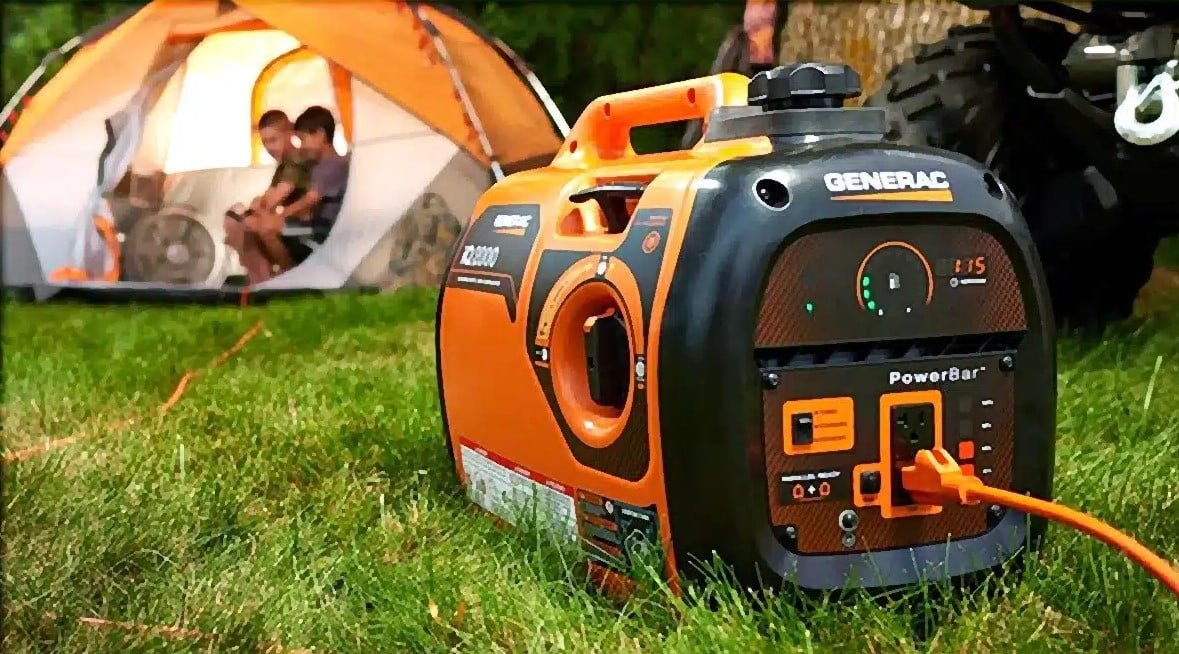
The crackle of a campfire, the whisper of the wind through pine trees, the distant hoot of an owl – these are the sounds of true wilderness. But even the most dedicated nature lover sometimes needs a little modern convenience. A charged phone, a mini-fridge keeping drinks cold, or even a CPAP machine for a good night's sleep. That’s where a small camping generator becomes your silent, reliable partner. Choosing between the various types of small camping generators can feel like deciphering a complex wilderness map, but it doesn't have to be.
We're here to demystify portable power, helping you select the perfect generator that enhances your outdoor adventures without disturbing their tranquility.
At a Glance: Your Portable Power Cheat Sheet
- Fuel Types: Gas, propane, diesel (less common for small camping), and solar/battery are your main options.
- Power Output: Match the generator's watts to what you need to run. Don't underestimate "surge" power for starting appliances.
- Noise Levels: Look for low dBA ratings or "super quiet" labels – your neighbors (and wildlife) will thank you.
- Portability: Weight, dimensions, and handles are crucial. Battery-powered units often win here.
- Safety Features: Critical for peace of mind, including overload protection and CO sensors for fuel-based models.
- Clean Power (Pure Sine Wave): Essential for sensitive electronics like laptops and medical devices.
- Solar Power Stations: Offer silent, emission-free operation and versatile charging, but have higher upfront costs and depend on sunlight.
The Power Players: Types of Small Camping Generators
Before diving into specifications, let’s get acquainted with the different kinds of portable powerhouses designed for your campsite. Each offers unique advantages and trade-offs, making the "best" choice highly personal to your needs.
Gasoline Generators: The Traditional Workhorses
Gasoline generators are perhaps what most people picture when they think of a portable power source. They're widely available, generally the least expensive upfront, and fuel is easy to find at almost any gas station. These units typically offer higher continuous power output compared to similarly sized battery stations, making them a solid choice for running more demanding appliances or for longer durations without needing to refuel.
However, they do come with a few considerations. Gasoline generators emit exhaust fumes, meaning they are strictly for outdoor use and require careful placement away from tents and ventilation systems. They can also be quite noisy, though modern "inverter" models are significantly quieter than older, conventional generators. Fuel storage can be an issue, as gasoline is highly flammable and requires approved containers and safe handling. The cost of gasoline also adds up over time, potentially offsetting some of the initial savings.
Best for: Campers needing consistent, higher wattage power for tools, larger appliances, or longer durations, where noise and emissions aren't primary concerns (or can be mitigated by distance).
Propane Generators: Cleaner Burn, Specific Uses
Propane generators offer an interesting alternative to gasoline. They burn much cleaner, producing fewer emissions and almost no smell, which is a significant advantage in a camping environment. Propane fuel is also safer to store than gasoline, as it's less prone to spillage and has a longer shelf life.
The main drawback for small camping applications is that propane units often have a lower power output compared to equivalent gasoline generators. They’re generally better suited for running a few small appliances, like lights, phone chargers, or perhaps a small fan. Like gasoline generators, they are not suitable for indoor use due to carbon monoxide production, and they can still produce a moderate amount of noise. You'll also need to carry bulky propane tanks, which can take up valuable space in your vehicle.
Best for: Those who prioritize cleaner emissions and safer fuel storage for lighter power needs, willing to manage propane tank logistics.
Diesel Generators: Robust, but Less Common for Small Camping
While diesel generators are incredibly robust, fuel-efficient, and can work well in freezing temperatures, they are typically less common for small camping applications. The reasons are pretty straightforward: they tend to be significantly bulkier, heavier, and more expensive upfront than gasoline or propane options. They also produce more harmful emissions and are generally noisier.
For large RVs or construction sites, diesel generators are fantastic. But for a weekend tent camping trip or even a small teardrop trailer, their size, weight, and initial cost usually outweigh their benefits. We include them here for completeness, but don't typically recommend them if you're looking for truly small and portable power for camping.
Best for: (Generally not recommended for small camping due to size, weight, and noise, but excellent for heavy-duty, long-duration power in larger setups).
Solar Generators (Portable Power Stations): The Modern Solution
Welcome to the future of camping power. "Solar generator" is a bit of a misnomer; these are actually high-capacity lithium-ion battery banks combined with an inverter, often bundled with solar panels for recharging. They are the rising stars in the camping world for good reason:
- Silent Operation: No moving parts means they run completely silently, preserving the peace of your campsite.
- Zero Emissions: You can safely use them inside your tent or RV without worrying about carbon monoxide.
- Portability: Generally lightweight and compact, making them easy to carry.
- Versatile Charging: Recharge them via a wall outlet at home, your car's 12V port, or, of course, solar panels for off-grid power replenishment.
- Clean Power: Most offer pure sine wave AC output, vital for sensitive electronics like laptops, drones, or medical devices.
The main drawback for solar generators is their upfront cost, which is typically higher than gas-powered alternatives for similar wattage. Their continuous power output might also be lower than a gas generator of comparable size, and their runtime is limited by battery capacity. While solar panels offer freedom, they require ample sunlight and don't work at night or on cloudy days.
Best for: Eco-conscious campers, those who value quiet and clean power, anyone with sensitive electronics, and those looking for flexible charging options. They are ideal for tent camping, car camping, and even backyard use.
Decoding Your Needs: Key Considerations Before You Buy
Choosing the right small camping generator isn't about finding the "most powerful" or "cheapest." It's about matching the generator to your specific camping style and power requirements. Here’s what to look at:
Power Output and Capacity: Watts You Need
This is the most critical factor. Generators are rated by their wattage: "running watts" (continuous power) and "peak/surge watts" (brief burst for starting motors).
- Calculate Your Needs: List all the devices you plan to run simultaneously and sum their running watts. Add a buffer for surge watts if you're powering anything with a motor (like a mini-fridge). A typical phone charger might be 10-20W, a laptop 50-100W, and a mini-fridge 40-60W running, but 200-300W surge.
- Gas vs. Battery: Gas generators generally offer higher continuous running watts. Battery power stations provide clean, stable power but have a finite capacity (measured in Watt-hours, Wh) that dictates how long they can power devices.
- Pure Sine Wave: If you're powering sensitive electronics (laptops, CPAP machines, medical devices), insist on a generator with "pure sine wave" output. This provides stable, clean electricity, preventing damage that can occur with modified sine wave output found in some cheaper models.
Portability and Weight: Ease of Transport
You're camping, after all, so you'll be moving your generator around.
- Lighter is Better: Look for models with carry handles. Battery-powered stations are often significantly lighter and more compact than fuel-based generators. For example, the MARBERO Portable Power Station weighs a mere 3.2 lbs, while some gas inverter generators can be 40+ lbs.
- Dimensions: Consider the space in your vehicle. A smaller footprint is always a plus. Even if a generator is powerful, it's useless if it won't fit comfortably in your car or RV. Some larger portable units, like the ERAYAK 2400W Portable Inverter Generator, offer optional wheel kits and telescoping handles to make the 42-pound weight more manageable.
Noise Levels: Preserve the Peace
This is often overlooked until you're sitting next to a roaring generator. Noise levels are measured in decibels (dBA).
- The Quieter, The Better: Look for models with low dBA ratings, ideally below 60 dBA, or labeled "super quiet." For context, a normal conversation is around 60 dBA. The ERAYAK 2400W Portable Inverter Generator boasts an ultra-quiet 52.5 dB, while many Jackery models are well under 40 dBA.
- Battery Wins: Solar generators (power stations) are completely silent, offering the ultimate in tranquility.
- Inverter Technology: If you choose a gas generator, prioritize inverter models. They electronically control engine speed to match demand, significantly reducing noise and fuel consumption compared to conventional generators.
Fuel Type and Duration: Planning Your Power Supply
Your choice of fuel impacts convenience, run time, and safety.
- Gasoline: Offers long run times on a single tank but requires transporting volatile fuel. Always carry extra in approved containers, and never run out mid-trip.
- Propane: Cleaner to burn and safer to store, but propane tanks can be bulky, and run times might be shorter than gasoline per equivalent energy.
- Battery (Solar Generators): No fuel needed, but run time is limited by battery capacity. Recharging options become critical for extended trips.
- Extended Use: For longer adventures or off-grid living, gas generators might provide more consistent power over multiple days without constant recharging. For shorter trips or where quiet is paramount, a power station shines.
Outlets and Compatibility: Plug and Play
Think about what you'll be plugging in.
- Variety is Key: Ensure you have enough AC outlets (standard wall plugs), USB ports (for phones, tablets), and DC outputs (like a 12V car port) to power all your devices simultaneously.
- Pure Sine Wave Again: For anything with sensitive electronics, this is non-negotiable. It ensures a smooth, stable electrical waveform that won't harm your devices. The Jackery Explorer 300 and GRECELL Portable Power Station are excellent examples providing this stable output.
Safety Features: Don't Compromise
Your safety and the longevity of your devices depend on these.
- Battery Management System (BMS): For power stations, a robust BMS protects against overcharge, over-discharge, overcurrent, and short circuits. The MARBERO Portable Power Station and GRECELL Portable Power Station both highlight their built-in BMS.
- Overload Protection: Essential for all generator types to prevent damage to the unit and your connected devices if too much power is drawn.
- CO Protection: For gas generators, carbon monoxide sensors and automatic shutdown features are critical life-saving technologies.
- Inverter Technology: Beyond noise reduction, it provides stable power, which is safer for electronics.
Charging Options: Keeping the Juice Flowing
How will you replenish your generator's energy?
- Fuel Generators: Simply refuel with gasoline or propane.
- Power Stations: Offer multiple ways to recharge:
- AC Wall Outlet: Fastest way to recharge at home or anywhere with grid power.
- Car Outlet: Handy for recharging on the go between campsites.
- Solar Panels: The game-changer for off-grid camping. Compatibility with solar panels, like the Jackery SolarSaga series for Jackery power stations, extends your usability indefinitely as long as there's sun. Look for units that clearly state their solar input capacity (e.g., 30W or 60W solar panels for the MARBERO).
Deep Dive: Top Picks for Portable Power
Let’s look at some examples from the market that exemplify the different types and features discussed.
Gas-Powered Champs: Reliable Fuel-Fired Power
For those who prioritize raw power output and longer run times from a single tank, these gasoline-powered units are excellent choices:
- PowerSmart Gas Powered Portable Generator (1200 Peak / 900 Running Watts):
This ultralight (around 30 lbs) and compact option is perfect for minimalists. Its 71cc 2-stroke engine is EPA-compliant and starts with a simple recoil pull. You get a single 120V 20A outlet and a 12V DC outlet, making it great for charging a battery or running small lights. It’s designed for "super quiet operation" in its class. - Ideal for: Basic power needs like charging devices, running a few lights, or inflating air mattresses. A great entry point into fuel-based portable power.
- ERAYAK 2400W Portable Inverter Generator (2400 Peak / 1800 Running Watts):
Stepping up in power, this inverter generator delivers clean, stable electricity, making it safe for sensitive devices like CPAP machines and laptops. Its "Eco mode" optimizes fuel efficiency and dramatically reduces noise to an ultra-quiet 52.5 dB. While it's heavier at 42 pounds, the option for a wheel kit and telescoping handle makes transport much easier. - Ideal for: Campers needing more power for multiple appliances, sensitive electronics, and who still value quiet operation from a gas unit.
Solar Powerhouses: Silent, Clean, and Smart
These lithium battery-based power stations are setting the standard for modern camping power, offering versatile charging and eco-friendly operation.
- MARBERO Portable Power Station:
This extremely compact (6.5 x 4.6 x 3.1 inches) and lightweight (3.2 lbs) unit is a marvel of portability. It can fast-charge to 80% in just 2 hours and allows simultaneous charging of the unit itself and your devices. With 8 output ports and compatibility with 30W or 60W solar panels, it’s highly versatile. Its built-in BMS offers essential overload and short-circuit protection. - Ideal for: Backpackers, minimalist campers, or anyone needing ultra-portable power for phones, tablets, and small lights.
- Jackery Explorer 300 (293Wh Lithium Power Station):
A favorite for a reason, the Explorer 300 weighs just 7.1 pounds and recharges via wall outlets or solar panels. It features two pure sine wave AC outlets, a PD 60W USB-C port, USB fast charge ports, and a DC car port, allowing it to charge up to 6 devices simultaneously. Its stable output makes it perfect for drones, cameras, laptops, and other sensitive electronics, all while operating quietly. - Ideal for: Photographers, digital nomads, or anyone with a variety of sensitive electronics, seeking a balance of capacity and portability. This is a highly recommended option in a comprehensive guide to small camping generators.
- GRECELL Portable Power Station (330W Continuous / 600W Surge):
This lightweight and compact power station offers pure sine wave output, making it safe for sensitive devices like medical equipment, laptops, and projectors. It includes a 60W USB-C PD fast charging port and quick-charge USB-A ports. Advanced BMS and dual silent cooling fans ensure safety and optimal performance. - Ideal for: Campers requiring reliable, clean power for a few essential devices, including medical equipment, with robust safety features.
Jackery Solar Generators: Integrated Solar Solutions
Jackery excels at providing integrated solar generator packages, combining their popular Explorer power stations with their efficient SolarSaga panels. These bundles offer a complete off-grid power solution.
- Jackery Solar Generator 240 (240Wh Battery Capacity):
The most compact of the Jackery line, offering excellent portability for basic needs. With a noise level under 36.4dB, it's virtually silent. It can power a camping light for about 40 hours, a phone for 11.3 hours, or a CPAP machine for 6.8 hours. - Ideal for: Weekend campers, tent campers, or as an emergency backup for small essentials.
- Jackery Solar Generator 300 (293Wh Battery Capacity):
Combines the Explorer 300 Power Station with a SolarSaga 100W panel. With 2 AC outlets, USB-A, USB-C, and a 12V carport, it charges up to 6 devices simultaneously. It boasts a quiet 36.4dB operation and a lifespan of 500 cycles to 80%+ capacity. Power a camping light for 50 hours, a phone for nearly 14 hours, or a CPAP for 8.3 hours. - Ideal for: A versatile all-rounder for car camping, small RVs, and anyone needing balanced power for multiple devices.
- Jackery Solar Generator 300 Plus (288Wh Battery Capacity):
A newer iteration, this unit offers similar capacity to the Explorer 300 but with improved lifespan (3000 cycles to 80%+) and a lighter weight (11 lbs). Paired with SolarSaga 40W panels for recharging. Power a camping light for 49 hours, a phone for 13 hours, or a CPAP for 8.1 hours. - Ideal for: Those seeking enhanced durability and longevity in a compact, portable package, especially for frequent use.
- Jackery Solar Generator 500 (518Wh Battery Capacity):
A significant step up in power and capacity, providing 500W of inverter power and 7 upgraded output ports. Recharges quickly with a SolarSaga 100W panel. With a noise level below 37.9dB and 500 cycles lifespan, it’s a robust choice. Power a camping light for 88 hours, a phone for 24.4 hours, or a CPAP for 14.6 hours. - Ideal for: Longer trips, RV camping, or powering more demanding appliances and multiple devices over extended periods.
Making the Math Work: Calculating Run Time
Understanding how long your devices will run from a power station is key to planning. It's a simple calculation:
Working Time (hours) = (Battery Capacity in Watt-hours, Wh) * 0.85 / (Operating wattage of the appliance)
- The "0.85" factor accounts for power loss during conversion from DC to AC.
- Example: If you have a Jackery Solar Generator 500 (518Wh) and you're powering a 100W appliance, your working time would be:
518Wh * 0.85 / 100W = 4.4 hours.
This formula allows you to accurately estimate how much power you'll need and whether a specific power station can meet your demands for the duration of your trip. Don't forget to factor in solar recharging capabilities for longer trips, as this can extend your power supply indefinitely.
Smart Choices for the Trail: Final Tips
Choosing the perfect small camping generator is an investment in comfort and convenience for your outdoor adventures.
- Prioritize Your Needs: Are you running a critical medical device or just charging your phone? Your answer will steer you toward a specific type and capacity.
- Consider Your Neighbors: Noise pollution is a real issue at campsites. Opt for the quietest generator you can afford, especially if you're camping in close quarters.
- Think Long-Term: A slightly higher upfront investment in a durable, feature-rich power station or a quiet inverter generator can save you headaches (and money) down the line.
- Safety First, Always: No matter which type of generator you choose, read the manual thoroughly and follow all safety guidelines. This means proper ventilation for fuel generators and understanding battery limitations for power stations.
- Test Before You Go: Never head into the wilderness with untested gear. Fully charge your power station or run your fuel generator at home with your intended appliances to ensure everything works as expected.
By carefully considering these factors and understanding the different types of small camping generators available, you can confidently select a portable power solution that keeps your devices running and your campsite serene. Happy trails!