Top-Rated Small Generators for Camping: Expert Picks for Your Trip
Picture this: you're deep in the wilderness, the stars are out, and the campfire is crackling. But instead of just roughing it, you've got lights, music, your phone charging, and even a fresh cup of coffee brewing. That's the magic a top-rated small generator for camping can bring, transforming a primitive campsite into a luxurious outdoor escape. No longer just noisy, bulky boxes, today's portable generators are powerful, surprisingly quiet, fuel-efficient, and engineered for the modern adventurer.
Choosing the right portable power source is key to enhancing your outdoor experience without disrupting the peace of nature. This guide cuts through the noise, offering expert reviews and comparisons to help you find the perfect small generator for your next camping trip.
At a Glance: What You Need to Know
- Inverter Generators Rule: For camping, inverter generators are typically best. They provide "clean" power safe for sensitive electronics and run much quieter than traditional models.
- Size Matters (Watts): Match the generator's output (running and starting watts) to your specific power needs, from charging phones to running an RV AC.
- Fuel Flexibility: Dual-fuel generators (gasoline/propane) offer versatility, especially in remote areas. Propane is great for long-term storage and cleaner burning.
- Noise Level: Look for low decibel ratings (dB). Anything under 60 dB is often considered "conversation level."
- Safety First: Always operate generators outdoors, at least 20 feet from your tent or vehicle, to prevent carbon monoxide poisoning.
- Maintenance is Key: Treat your generator like a small engine; regular oil changes and fuel treatment ensure reliability.
The Power Shift: Why a Generator Enhances Your Camp
Camping used to mean a complete disconnect from modern conveniences. While many still cherish that unplugged experience, others want the freedom to bring a few comforts along. Portable generators fit this bill perfectly. They can power everything from an electric grill or coffee maker to lights, fans, CPAP machines, and even the air conditioner in your RV.
Modern generators have made incredible strides in efficiency, portability, and noise reduction. You're no longer stuck with a deafening, fuel-guzzling behemoth. Instead, you'll find sleek, relatively quiet units designed to integrate seamlessly into your outdoor adventures, ensuring you have reliable power wherever your journey takes you.
Decoding Generator Types: Standard, Inverter, and Power Banks
Before we dive into specific models, let's clarify the different types of portable power solutions you'll encounter. Understanding these distinctions is crucial for making an informed choice.
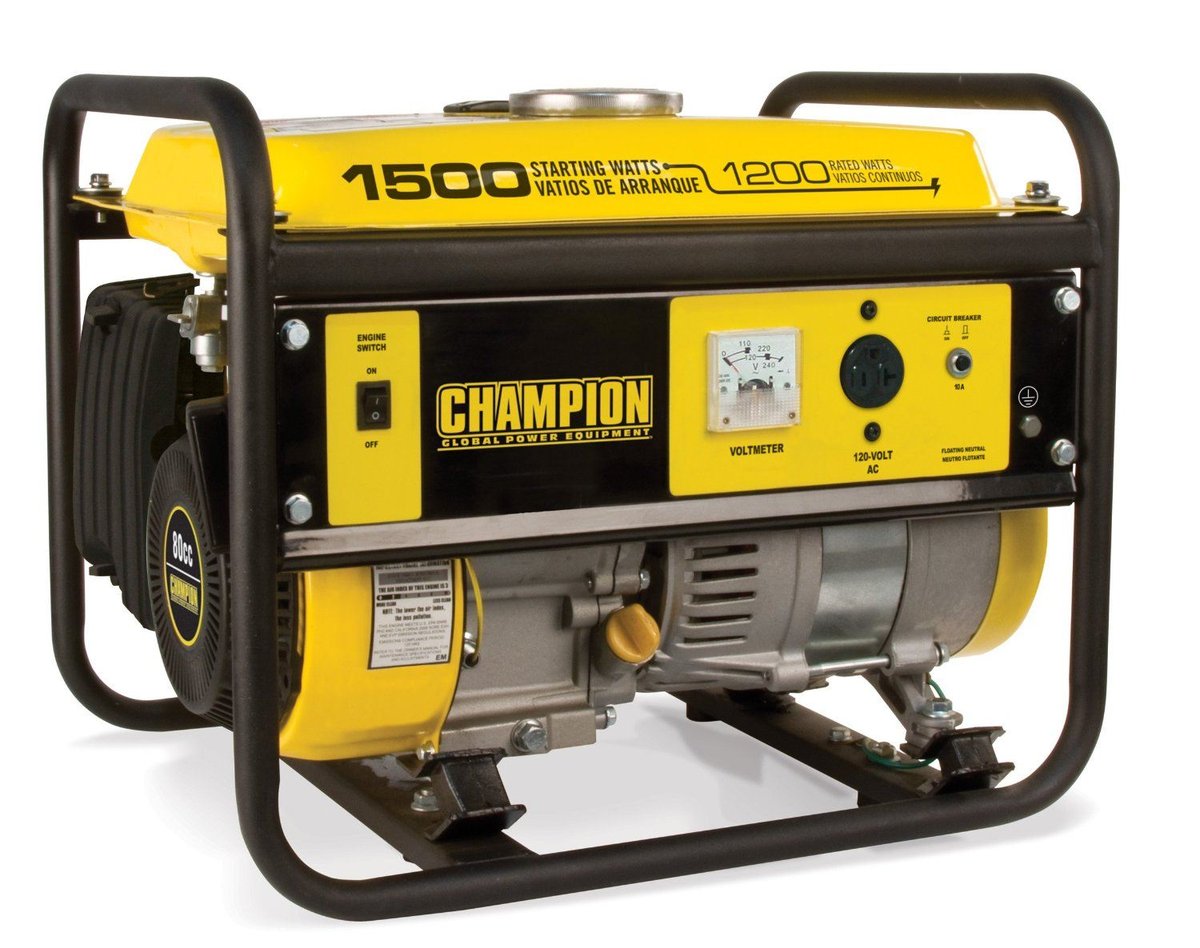
Standard (Open Frame) Generators
These are the traditional workhorses, often recognizable by their exposed components within a metal frame.
- How they work: An engine spins an alternator, generating AC power directly through a voltage regulator.
- Pros: Generally less expensive per watt, robust, and capable of high power output.
- Cons: Tend to be much louder, less fuel-efficient, and produce "dirty" power (unstable sine wave) that can harm sensitive electronics like laptops, smartphones, and some medical devices. Their open frame often means less protection for internal components and no significant noise dampening.
- Best for: Construction sites, powering non-sensitive tools, or as a home backup for basic appliances where noise isn't a primary concern. Rarely recommended for camping due to noise and power quality.
Inverter Generators: The Camper's Best Friend
Inverter generators are the modern solution, especially popular for camping and RVing.
- How they work: They convert AC power to DC, then back to a much cleaner AC current using a sophisticated microprocessor. This two-step process smooths out surges and creates a consistent, pure sine wave.
- Pros:
- Clean Power: Essential for safely running sensitive electronics.
- Quiet Operation: Often fully enclosed, significantly reducing noise levels – many run as quietly as a normal conversation.
- Fuel Efficiency: They can throttle the engine speed up or down based on the power demand, saving fuel.
- Portability: Typically lighter and more compact than standard generators of similar output.
- Cons: More expensive than standard generators, though prices have become more competitive.
- Best for: Camping, RVing, tailgating, and situations where quiet operation and clean power are paramount.
Power Banks (Portable Power Stations): The Electric Alternative
While not "generators" in the traditional sense (they don't burn fuel), these large battery packs are a fantastic option for shorter trips or lighter power needs.
- How they work: They store electrical energy in a large battery (lithium-ion, typically) and output it through various ports (AC, USB, 12V DC).
- Pros:
- Silent: No engine, no noise.
- Zero Emissions: Operates completely clean.
- Maintenance-Free: No oil changes, fuel stabilizers, or spark plugs.
- Indoor Use: Safe to use inside a tent or vehicle (though not typically needed).
- Rechargeable: Many can be recharged via solar panels, car outlets, or wall outlets.
- Cons:
- Limited Capacity: Can't power high-draw appliances for extended periods like a fuel generator.
- Recharge Time: Recharging can take several hours, especially with solar.
- Price: High capacity units can be expensive.
- Best for: Weekend camping, charging small devices (phones, laptops, cameras), running a mini-fridge or fan for a few hours, or powering a CPAP machine overnight.
Sizing Your Camping Generator: Watts and Your Needs
Before you even look at models, you need to understand your power requirements. This is the single most critical step in choosing the right generator. Overestimate, and you're hauling extra weight and spending more money. Underestimate, and your lights will dim, or your fridge won't kick on.
Understanding Watts: Starting vs. Running
Every appliance lists its power consumption in watts. You'll generally see two figures for motor-driven items:
- Starting Watts (Surge Watts): This is the brief, higher surge of power an appliance needs to start its motor (e.g., refrigerator, AC unit, power tools). This surge lasts only a few seconds.
- Running Watts (Rated Watts): This is the continuous power an appliance needs to operate once it's up and running.
Example: A small RV air conditioner might need 2,000 starting watts but only 1,500 running watts. Your generator needs to be able to handle that initial 2,000-watt surge.
How to Calculate Your Needs
- List Your Gear: Make a list of everything you plan to power simultaneously.
- Find the Watts: For each item, look for its wattage on the label, owner's manual, or a quick online search.
- If you only find amps (A), multiply
Volts (V) x Amps (A) = Watts (W). (Most camping generators are 120V).
- Sum Running Watts: Add up the running watts for all items you want to use at the same time. This is your minimum running watt requirement.
- Identify Highest Starting Wattage: Find the single appliance on your list with the highest starting wattage.
- Calculate Total Starting Watts: Add your total running watts (from step 3) to the difference between the highest starting watts and its running watts. Or, simpler: sum all running watts, then add the largest single starting watt requirement to that sum.
- Example: You want to run a 600-watt coffee maker and a small fridge (100 running watts, 1000 starting watts).
- Total running watts: 600 (coffee) + 100 (fridge) = 700 watts.
- Highest starting draw: Fridge at 1000 watts.
- Your generator needs to handle at least 1000 starting watts and 700 running watts simultaneously. So, you'd look for a generator with at least 1000 starting watts and maybe 800-1000 running watts to be safe.
General Guidelines for Camping: - Under 1000 watts: Great for charging small electronics, running LED lights, small fans.
- 1000-2000 watts: Good for small fridges, microwaves (briefly), more robust lighting, maybe a small electric grill.
- 2000-3000 watts: Can handle most RV amenities (excluding AC), multiple appliances, power tools.
- 3000+ watts: Necessary for RV air conditioners, larger electric grills, multiple high-draw items.
Remember, it's always better to have a little more capacity than you think you'll need. You might discover new uses for your generator!
Fueling Your Adventure: Gasoline, Propane, and Beyond
The type of fuel your generator uses impacts performance, storage, and convenience. Most camping generators run on gasoline, but dual-fuel options are gaining popularity.
Gasoline: The Common Standard
- Pros: Widely available, often provides the highest power output (BTUs) for a given engine size.
- Cons:
- Degradation: Gasoline degrades over time, especially with ethanol blends. This can clog carburetors and fuel lines, leading to starting issues.
- Volatility: More flammable and less safe to store than propane.
- Availability: During emergencies, gasoline can be scarce.
- Actionable Tips:
- Fuel Stabilizer: ALWAYS use a fuel stabilizer like STA-BIL.
- Ethanol-Free: If possible, use ethanol-free gasoline (still stabilize it!). Ethanol attracts moisture and can damage engine components.
- Run Dry: Before long-term storage, close the fuel valve and run the generator until it stalls. This clears the carburetor of fuel.
- Regular Use: Run your generator for 15-20 minutes every 2-3 months to keep components lubricated and fuel cycling.
- Octane: Use 87 octane or higher.
Propane (LPG): The Stable, Clean Alternative
Increasingly common in dual-fuel generators.
- Pros:
- Storage Stability: Propane has an indefinite shelf life and won't degrade or clog carburetors. Ideal for long-term storage or remote locations.
- Cleaner Burning: Produces fewer emissions and less carbon buildup, potentially extending engine life.
- Quieter: Tends to run slightly quieter than gasoline.
- Readily Available: Can use standard BBQ propane tanks.
- Cons:
- Reduced Output: Propane creates fewer BTUs than gasoline, meaning a slight reduction (typically 10-15%) in starting and running watts.
- Fuel Line: Requires a separate hose connection to the propane tank.
- Cost: Propane can sometimes be more expensive per equivalent energy unit than gasoline.
Natural Gas: For Home Backup, Not Portable Camping
While some tri-fuel generators exist or propane units can be converted, natural gas is generally not a practical option for portable camping generators. It requires a dedicated, professionally installed line, making it suitable only for permanently installed standby generators.
Expert Picks: Top-Rated Small Generators for Camping
Now, let's get to the heart of the matter – the best small generators for your camping adventures. We've assessed these models for power, portability, noise, fuel efficiency, and critical features.
Best Overall Portable Powerhouse
Honda EU2200i Inverter Generator
- Why it's #1: The Honda EU2200i isn't just a generator; it's an industry benchmark for reliability, quiet operation, and clean power. It's incredibly portable, about half the size and weight of many others in its class, making it easy to pack and transport.
- Key Features:
- 2200 Starting / 1800 Running Watts: Ample power for most camping needs, including sensitive electronics.
- Whisper Quiet: Fully enclosed design keeps noise levels down (around 68.9 dB at no load, 76 dB eco mode, 81.2 dB heavy load – impressively low for its output).
- Clean Power (Smooth Sine Wave): Ensures sensitive devices like laptops, phones, and CPAP machines are safe.
- Advanced Features: Includes a closable gas cap vent for safe transport and a power/fuel shutoff switch to run the carburetor dry.
- Parallel Capability: Link two EU2200i units for double the power (4,400 starting / 3,600 running watts) – ideal if your needs grow.
- Perfect for: Anyone seeking the ultimate blend of portability, reliability, quiet operation, and clean power. It's an investment that pays off in peace of mind.
Best for RVers & Heavy-Duty Camping
Champion Power Equipment 4500-Watt Dual Fuel Inverter Generator
- Why it's Great: When you need serious power to run an RV air conditioner or multiple appliances, the Champion 4500 is a top contender. Its dual-fuel capability and higher output make it incredibly versatile.
- Key Features:
- 4500 Starting / 3650 Running Watts (Gas): Easily handles RV AC units and other high-draw appliances.
- Dual Fuel: Runs on gasoline or propane, providing crucial flexibility for remote locations or long-term fuel storage.
- Mobility: Equipped with wheels and a handle for easier transport despite its power.
- Parallel Ready: Can be paired with another Champion inverter for even more power.
- Perfect for: RV owners, campers with high power demands, or anyone who values dual-fuel versatility and robust output.
Honda EU3000i Inverter Generator - The Upgrade: If the EU2200i isn't quite enough, the EU3000i steps up with more grunt while maintaining Honda's renowned quality.
- Key Features:
- 3000 Starting / 2800 Running Watts: Handles heavier-duty appliances with ease.
- Excellent Runtime: A 3.4-gallon gas tank provides 6.9 to 19.6 hours of run time.
- Quiet Operation: At 57 decibels, it's comparable to normal conversation.
- Perfect for: Campers needing a bit more power than the 2200i for specific appliances (e.g., a larger RV AC) but still demanding ultra-quiet, reliable performance.
Yamaha EF2200iS Inverter Generator - Strong Alternative: Yamaha consistently rivals Honda in quality and performance. The EF2200iS is a compact inverter with some excellent features.
- Key Features:
- High Power Output for Size: Delivers robust power in a compact form factor.
- RV Plug: Features a dedicated RV plug for direct hookup.
- Quiet Operation: Four-stroke motor and quiet muffler produce low decibel levels.
- Smart Throttle: Automatically adjusts engine speed to match load, maximizing fuel efficiency.
- Perfect for: Campers seeking Honda-level reliability and quiet operation with the added convenience of an RV plug, all in a compact design.
Best Value & Budget-Friendly Picks
Wen DF360iX Dual Fuel Inverter Generator
- Budget-Friendly Dual Fuel: For an affordable entry into dual-fuel inverter power, the Wen DF360iX is hard to beat.
- Key Features:
- 2900 Starting / 2500 Running Watts (Gas); 2600 Starting / 2300 Running Watts (Propane): Solid power for camping, jobsites, and small-to-mid-size RVs.
- Lightweight: Weighs only 49 pounds.
- Versatile Outlets: Includes a 30-amp RV port, two AC ports, 12V DC, and two USB-A ports.
- Safety Features: Low-fuel auto-shutoff and a CO sensor for peace of mind.
- Decent Runtime: 1.5-gallon gas tank runs about 5 hours at half-load; a 20-pound propane tank can extend this to 14 hours.
- Perfect for: Campers who want dual-fuel flexibility and inverter reliability without breaking the bank.
Craftsman 2500i Inverter Generator - Affordable Simplicity: The Craftsman 2500i offers quiet, reliable inverter power at a very attractive price point.
- Key Features:
- 2500 Starting / 2200 Running Watts: Suitable for small devices, lights, and mobile charging.
- Quiet Operation: Four-stroke engine ensures low noise levels.
- USB Ports: Convenient for charging phones and tablets.
- Parallel Ready: Two units can be linked for double the power.
- Perfect for: Entry-level campers or those with basic power needs who prioritize affordability and quiet operation.
Champion 4,750-watt Dual Fuel Generator - Best Value for Home/RV: While often used for home backup, its dual-fuel capability and robust output make it excellent value for larger RVs.
- Key Features:
- 4750 Starting / 3800 Running Watts (Gas): Enough capacity to run 3-4 critical home circuits or small-to-medium RVs.
- Dual Fuel: Gas or propane, with an adapter hose for a 20-pound propane tank included.
- RV Receptacle: Includes a 30-amp RV receptacle.
- Caveat: This is not an inverter generator, so its power quality and noise levels will be less ideal for sensitive electronics or quiet campsites compared to inverter models. It also doesn't have 240-volt outlets.
- Perfect for: Campers needing significant power for an RV at an economical price, where inverter-grade power isn't a strict requirement for all items.
Best for Sensitive Electronics & Ultra-Quiet Operation
Generac iQ3800 Portable Inverter Generator
- Clean Power Specialist: Generac's iQ3800 is engineered to deliver exceptionally clean power for your most delicate electronics.
- Key Features:
- 3800 Starting / 3500 Running Watts: Strong output for a wide range of devices.
- Ultra-Clean Power (THD < 3%): Ideal for sensitive electronics like high-end laptops, medical devices, and gaming systems.
- Whisper Quiet: One of the quietest generators in its size class.
- User-Friendly: Electric start, auto choke, simple fuel switching, and an LED display for run hours, fuel level, and load.
- Dual Fuel: Added versatility with gasoline and propane options.
- Perfect for: Campers who demand the absolute cleanest power for their sensitive gear and prioritize ultra-quiet operation, especially in quiet campgrounds or for overnight CPAP use.
Best Compact Power & Versatility
GD400BN Dual Fuel Inverter Generator
- Small Yet Mighty: This model packs a punch for its relatively small size and weight.
- Key Features:
- 3000 Starting / 2700 Running Watts (Propane): Impressive power output for a 47-pound unit.
- Lightweight: At 47 pounds, it's very portable.
- Dual Fuel: Offers the flexibility of gasoline and propane.
- Outlets: One AC outlet and a 120V 30-amp RV outlet.
- Consideration: The 1.1-gallon gas tank offers limited runtime, so leveraging propane (which typically runs longer per standard tank) is a smart move.
- Perfect for: Campers seeking a highly portable dual-fuel inverter generator that can still power an RV or multiple appliances, especially when propane is the preferred fuel source.
Pulsar 7,250-Watt Dual-Fuel Inverter Generator - Most Versatile: The Pulsar 7,250-watt model offers an incredible range of power and features in a dual-fuel inverter package.
- Key Features:
- 7,250 Starting / 6,250 Running Watts (Gas): Massive power for virtually any camping or home backup need.
- Dual Fuel: Runs on both gasoline and propane.
- Clean Power (THD < 3%): Ensures safety for all electronics, from delicate to heavy-duty.
- Wide Wattage Range: Can run from 500 to 5,500 watts (including 240 volts).
- Perfect for: Campers who need maximum power and versatility, perhaps for a large RV, multiple high-draw items, or even as a home backup, all while enjoying inverter-grade power quality and dual-fuel flexibility.
Best for Minimalist, Green Power
Jackery Explorer 1000 Portable Power Station (Power Bank)
- The Silent Solution: For shorter trips or when silence is golden, the Jackery Explorer 1000 is an outstanding electric power bank.
- Key Features:
- 1000Wh Capacity: Powers a TV for 9 hours or a mini cooler for 13 hours.
- Multiple Outlets: Eight outlets including AC, USB-A, USB-C, and car port.
- Lightweight: Weighs just 22 pounds.
- Solar Ready: Solar add-on available for extended, clean power generation.
- Fast Recharging: Recharges in 5.5 hours via AC.
- Perfect for: Eco-conscious campers, shorter trips, silent power needs (e.g., CPAP), or as a supplementary power source to a generator.
Westinghouse Solar Generator Bundle - Ultra-Light Solar: For the truly minimalist and environmentally conscious camper, this bundle offers clean, quiet power for small devices.
- Key Features:
- Lightweight: The generator unit weighs only 4 pounds.
- Includes Solar Panel: Ready for solar charging right out of the box.
- Powers Small Devices: Ideal for phones, speakers, and other low-wattage electronics.
- Built-in Flashlight: Handy for navigating your campsite after dark.
- Perfect for: Backpackers, day-trippers, or anyone needing ultra-portable, silent power for essential personal electronics.
Best Overall Capacity (If you need to power a small home from your campsite)
Harbor Freight Predator 9,500 Inverter Generator
- Massive Power for the Price: While pushing the definition of "small," this unit offers incredible capacity for its cost in the inverter class.
- Key Features:
- 9500 Starting / 7600 Running Watts: Capable of powering all critical circuits in a modest home or a large RV setup.
- Inverter Technology: Despite its size, it delivers clean power.
- Mobility: Includes four wheels and a handle for movement.
- Versatile Outlets: Features 120V 20-amp and 240V 30-amp twist locks.
- Perfect for: Campers with extreme power needs (e.g., very large RVs, multiple travel trailers, or those using it as a dual-purpose home backup).
Essential Safety Practices for Camping Generators
While generators offer incredible convenience, safety must always be your top priority. Misuse can be deadly.
- Carbon Monoxide (CO) Kills: Generators produce carbon monoxide, an odorless, colorless gas that can be fatal.
- Never operate a generator in an enclosed space. This includes garages, sheds, tents, RVs, or even too close to your vehicle.
- Run Outdoors Only: Always operate your generator outdoors, at least 20 feet away from your tent, RV, or any other structure. Direct the exhaust away from windows, doors, and vents.
- CO Sensors: Most modern generators now include CO auto-shutoff sensors, which is a critical safety feature. Consider purchasing a separate battery-powered CO detector for your tent or RV as an extra precaution.
- Fire Hazards:
- Refuel Safely: Always turn off the generator and let it cool before refueling. Spilled fuel on a hot engine can ignite.
- Store Fuel Properly: Store gasoline in approved, labeled containers away from living areas and heat sources.
- Electrical Safety:
- Dry Conditions: Never operate a generator in wet conditions. Protect it from rain or snow with an open-sided shelter (like a canopy) that allows for ample ventilation.
- Extension Cords: Use heavy-duty, outdoor-rated extension cords that are the correct gauge for the power load. Inspect cords for damage before each use.
- Grounding: For powering devices directly from generator outlets, grounding is typically not required. However, if you're connecting your generator to your home's electrical system (via a manual transfer switch), consult your owner's manual, a licensed electrician, and local ordinances. This usually involves a grounding rod to safely direct fault current to the earth. Be aware of "neutral-bonded" vs. "floating neutral" generators – your manual will specify. Generators with GFCI outlets often require specific wiring if connecting to home circuits.
Keeping Your Generator Running: Maintenance Made Easy
A little routine maintenance goes a long way in ensuring your generator is always ready for your next adventure. Think of it like a lawnmower; regular care prevents headaches.
- Read Your Owner's Manual: This is your best resource for specific maintenance schedules, oil types, spark plug gaps, and troubleshooting tips.
- Oil Changes: Regularly check and change the oil according to the manufacturer's recommendations (often after the first 20-50 hours, then every 100-200 hours).
- Air Filter: Inspect the air filter regularly. Clean or replace it when it's dirty to ensure optimal engine performance.
- Spark Plug: Check the spark plug periodically. Clean off any carbon buildup or replace it if it's worn.
- Fuel Filter: If your generator has one, check or change the fuel filter as recommended.
- Battery (for Electric Start Models): If your generator has an electric start, keep the battery charged, especially during long periods of storage.
- Storage Best Practices:
- Fuel Treatment: Always use a fuel stabilizer with gasoline.
- Run Carburetor Dry: Before extended storage, close the fuel valve and run the generator until it stops to clear the carburetor.
- Clean: Wipe down the generator and ensure it's free of dirt and debris before storing.
- Troubleshooting Common Starting Issues:
- No Start: First, check the fuel level, ensure the fuel valve is open, and the choke is set correctly. Also, check the air cleaner box for obstructions.
- Long-Term Storage Issues: If your generator has sat for a while without fuel treatment or running dry, a clogged carburetor is often the culprit. This typically requires professional cleaning or replacement.
- Fuel Type: Use 87 octane fuel or higher. Avoid fuel lower than 87 octane. Use ethanol-free fuel or fuel with no more than 10% ethanol, always treated with a fuel stabilizer. This prevents moisture absorption, corrosion, and clogging of fuel lines and carburetors.
For an even deeper dive into portable power solutions, check out our comprehensive small camping generator guide. It covers everything from electrical basics to advanced maintenance tips.
Power Up Your Campsite: Making Your Choice
Choosing the ideal generator for your camping trips doesn't have to be a complicated task. By understanding your power needs, the differences between generator types, and the features that matter most, you can confidently select a model that enhances your outdoor adventures without adding stress.
Whether you opt for the quiet reliability of a Honda, the powerful versatility of a Champion dual-fuel, or the silent, green energy of a Jackery power bank, you're investing in convenience and comfort. Just remember to prioritize safety, keep up with routine maintenance, and you'll enjoy countless powered excursions under the open sky. Happy camping!