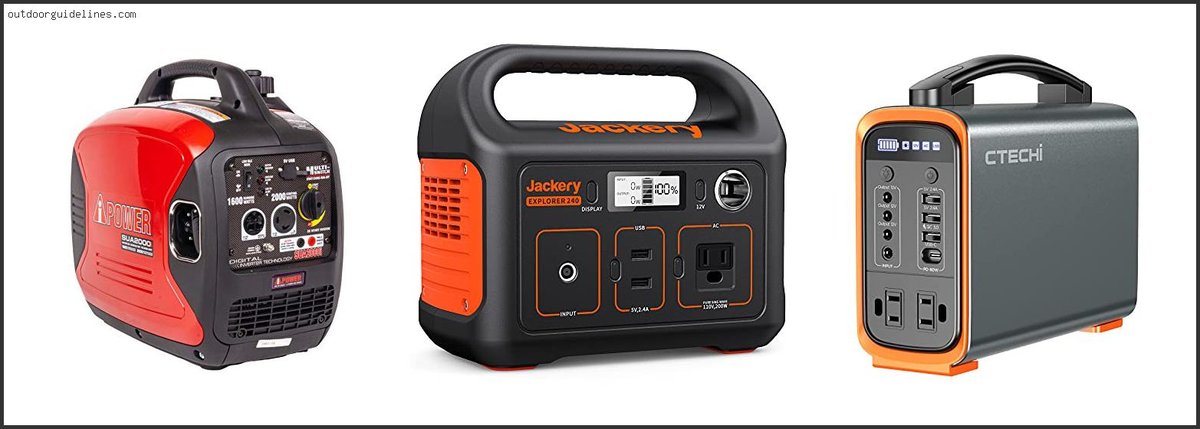
Picture this: you're deep in the wilderness, the campfire crackles, and the stars put on a show. But wait, your phone's dying, the portable fridge is whimpering, and that essential CPAP machine needs power. This isn't just about convenience anymore; it's about comfort, safety, and making the most of your escape. That's why choosing the best small generator for your camping needs isn't a luxury – it's often a necessity.
But with countless options, from silent battery banks to rumbling gas engines, how do you pick the right one without getting bogged down in specs and jargon? Don't worry, we're here to cut through the noise (pun intended) and guide you to a generator that truly fits your outdoor lifestyle.
At a Glance: Your Quick Camping Generator Checklist
Before we dive deep, here's a quick rundown of the critical factors to consider:
- What will you power? List every device and its wattage.
- Battery or Gas? Silent, eco-friendly vs. powerful, long-running.
- How much weight can you carry? Portability is key for camping.
- How quiet do you need it to be? Campsite etiquette often demands low noise.
- How will you recharge/refuel? Solar, wall outlet, or gas can?
- Are essential safety features included? Especially for gas generators.
- Does it have the right outlets? USB, AC, DC, and pure sine wave for sensitive gear.
Why a Small Generator is Your Camping MVP
Gone are the days when camping meant completely roughing it, unplugged from the world. Today's camping often blends outdoor adventure with creature comforts and critical safety nets. A small generator bridges that gap, providing reliable power for:
- Essential Devices: Keeping phones charged for navigation or emergencies, powering medical devices like CPAP machines.
- Camping Luxuries: Running a portable fridge to keep food fresh, inflating air mattresses, charging camera gear, or even powering a small fan on a hot night.
- Extended Trips: Giving you off-grid independence for days, weeks, or even months when paired with solar charging.
It's about empowering your adventure, not tethering you to civilization.
First Things First: Understanding Your Power Needs
This is arguably the most crucial step in your generator quest. Without knowing what you need to power, you're essentially guessing. Don't fall into the trap of overbuying (wasting money and carrying extra weight) or underbuying (leaving essential gear powerless).
How to Calculate Your Wattage Wish List
- List Every Device: Jot down everything you plan to power simultaneously. Think about what you absolutely need running at the same time.
- Find Their Wattage: Most devices have a wattage (W) listed on their label, in the manual, or on the manufacturer's website. For things like phones or tablets, typical charging wattage is 5-20W. Laptops might be 45-90W. A camping fridge could be 30-60W (running) but might surge higher when the compressor kicks on.
- Quick Tip: If you only see Amps (A) and Volts (V), multiply them: A x V = W.
- Sum It Up: Add all the wattages together. This gives you your running wattage requirement.
- Add a Safety Buffer: Always add at least a 20% safety buffer to your total. This accounts for startup surges (especially from motors in fridges or pumps) and ensures your generator isn't constantly running at its absolute limit, prolonging its life.
Example:
- Phone charging: 10W
- Laptop charging: 60W
- LED string lights: 20W
- Portable Camping Fridge: 50W (running, but let's assume a 150W surge)
- CPAP Machine: 40W
- Total Running Watts: 10 + 60 + 20 + 50 + 40 = 180W
- Consider Fridge Surge: If the fridge surges to 150W, your peak simultaneous draw could be 10 + 60 + 20 + 150 + 40 = 280W.
- Add 20% Buffer: 280W * 1.20 = 336W.
In this scenario, you'd want a generator capable of at least 350-400 running watts and a starting/peak wattage that can handle any surges.
The Great Divide: Battery Power Stations vs. Gas Generators
This is the fundamental choice you'll make, and it largely dictates your camping experience. Both have their merits, but they cater to very different needs.
Silent Power: The Appeal of Portable Power Stations (PPS)
Imagine powering your devices without a single whir, fume, or drop of gasoline. That's the magic of a portable power station, essentially a large, rechargeable battery pack.
The Upsides:
- Absolutely Silent: No engine noise means peaceful campsites, happy neighbors, and no interruptions to nature's soundtrack.
- Fume-Free: You can use them inside a tent or vehicle (with proper ventilation for heat, though minimal), eliminating carbon monoxide risks.
- Eco-Friendly: Zero emissions during operation. Many can be recharged via solar panels, making them ideal for sustainable off-grid living.
- Low Maintenance: No oil changes, fuel filters, or spark plugs. Just charge and go.
- Instant On: No pull-starts or warm-up times. Just plug in and flip a switch.
- Built-in Safety: Advanced Battery Management Systems (BMS) offer overload, short-circuit, and temperature protection, ensuring stable power for sensitive electronics.
- Modern Connectivity: Typically loaded with various USB ports (including fast-charging USB-C PD), AC outlets, and DC car ports.
The Downsides: - Limited Runtime: While large capacity units exist, their runtime is directly tied to their battery capacity (measured in Watt-hours, Wh). Once it's depleted, you need to recharge.
- Recharge Time: Recharging can take several hours from an AC wall outlet, and even longer with solar, depending on panel size and sunlight.
- Cost: Quality units, especially those with LiFePO4 batteries (known for longer lifespans, 10+ years), can have a higher upfront cost per watt compared to basic gas generators.
- Weight (for higher capacity): While generally lighter than comparable gas generators, high-capacity power stations can still be heavy.
Ideal For: Most camping scenarios, especially in designated campgrounds with noise restrictions, sensitive equipment (CPAP machines, laptops), shorter trips, or when combined with solar for extended off-grid stays.
Uninterrupted Juice: When Gas Generators Make Sense
When you need serious, sustained power, and readily available fuel, a gas generator steps in. These are the workhorses of the portable power world.
The Upsides:
- Virtually Unlimited Runtime: As long as you have fuel, you have power. Ideal for very long trips or applications where continuous power is critical.
- High Power Output: Often capable of generating more watts than comparably sized power stations, suitable for higher-demand appliances.
- Refueling is Quick: A quick pour of gasoline and you're back in business, unlike the hours required for battery recharging.
- Cost (sometimes): Smaller, traditional gas generators can sometimes be cheaper per watt-hour capacity upfront than battery stations, though fuel costs add up.
The Downsides: - Noise and Fumes: This is the big one. They're loud, emit exhaust fumes (carbon monoxide being a major safety concern), and require careful placement far from tents and people.
- Maintenance: They require regular oil changes, spark plug checks, air filter cleaning, and fuel system care.
- Fuel Storage: Gasoline is flammable, bulky, and requires safe handling and storage.
- Weight: Generally heavier and bulkier than battery power stations for similar power output.
- Environmental Impact: They burn fossil fuels, contributing to air pollution.
Ideal For: Extended trips where continuous high power is needed, powering large appliances, remote locations with no access to charging, or situations where noise isn't a primary concern (e.g., far from other campers). Always look for 4-stroke engines for better fuel efficiency and cleaner operation, and EPA compliance for environmental responsibility.
Beyond Power: Essential Features to Look For
Once you've decided on the power source (battery or gas) and crunched your wattage numbers, it's time to refine your choice based on these critical features.
Weight, Size, and How You'll Haul It
"Small" is subjective. Your definition will depend entirely on how you plan to transport your generator.
- Backpacking/Hiking: Think ultra-light. Units under 10 pounds are a must. This almost exclusively means smaller portable power stations.
- Car Camping/RV: You have more flexibility. Models up to 40-50 pounds are manageable, often equipped with sturdy handles. Some heavier units might offer wheel/handle kits for easier transport around the campsite.
Consider the physical dimensions, not just the weight. Will it fit in your trunk alongside other gear? Is the handle comfortable to grip?
The Decibel Dilemma: How Loud is Too Loud?
Noise levels are measured in decibels (dBA). For comparison:
- 50 dBA: Quiet conversation, refrigerator hum.
- 60 dBA: Normal conversation, air conditioner.
- 70 dBA: Vacuum cleaner, busy street.
Many campgrounds have strict noise regulations. Prioritizing lower decibel ratings (<55-60 dB) is crucial for a peaceful camping experience, especially in crowded areas. - Battery Power Stations: Completely silent. This is their undeniable advantage.
- Gas Generators: Their noise varies widely.
- Inverter generators are generally much quieter (often 50-60 dBA at 25% load) than traditional "open frame" gas generators (which can hit 70-75 dBA). Look for "Economy Mode" or "Eco Mode" features, which reduce engine speed (and noise) when power demand is low.
Keeping the Lights On: Charging Options and Speed
How you recharge your generator significantly impacts its utility, especially for longer off-grid adventures.
- Solar Compatibility: Absolutely crucial for extended off-grid trips, particularly with portable power stations. Look for units with built-in MPPT (Maximum Power Point Tracking) controllers. MPPT technology optimizes the charge from solar panels, making them up to 30% more efficient than older PWM controllers. A good benchmark: a 100W solar panel can fully charge a 300Wh power station in 3-5 hours of direct sunlight.
- AC Wall Charging: The fastest way to charge a power station before your trip. Speeds vary wildly, from fast-charging units that hit 80% in 1-2 hours to others that take 6-8 hours for a full charge. Fast charging, like USB-C Power Delivery (PD) for smaller devices, is a huge convenience.
- Car Charging: Many power stations can charge from your vehicle's 12V DC outlet, albeit usually slower than AC or solar.
- Fuel Efficiency (Gas): For gas generators, evaluate their runtime per tank, often specified at 25% or 50% load. An "Economy Mode" on inverter generators adjusts engine speed to match the load, dramatically improving fuel efficiency and extending runtime.
Safety First, Always: What to Demand
Powering your campsite should never come at the expense of safety.
- Battery Power Stations:
- BMS (Battery Management System): Essential for regulating voltage, current, and temperature, protecting both the battery and your connected devices.
- Overload, Short Circuit, and Temperature Protection: Standard safety features that prevent damage and hazards.
- Pure Sine Wave Output: Absolutely essential for sensitive electronics like laptops, medical devices (CPAP), and anything with a motor. It mimics household current. Modified sine wave output, found in some cheaper units, can potentially damage or prematurely wear out these devices.
- Gas Generators:
- CO (Carbon Monoxide) Detection and Automatic Shutdown: This is non-negotiable for any gas generator used in or around camping areas. CO is an invisible, odorless killer. If levels become dangerous, the generator will shut down automatically.
- EPA Compliance: Signifies that the generator meets environmental standards for emissions.
Plugging In: Output Ports and Pure Sine Wave Power
A generator is only as useful as its ability to connect to your devices.
- Variety of Ports: Look for multiple USB ports (especially USB-C PD for fast charging laptops and modern phones), standard AC outlets (the three-prong kind), and often a 12V DC car port.
- Pure Sine Wave AC Output: As mentioned under safety, this is critical for sensitive electronics. It ensures a smooth, clean power wave, preventing potential damage to your expensive gear. Always confirm a generator provides pure sine wave output if you plan to power laptops, medical equipment, or power tools.
Go the Distance: Runtime, Fuel Efficiency, and Eco Modes
For gas generators, runtime is paramount. Manufacturers typically specify hours of operation at 25% or 50% load. Real-world usage will vary based on what you're powering. Inverter generators often feature an "Economy Mode" (or "Eco Mode") that adjusts the engine speed to precisely match the power demand. This conserves fuel, reduces noise, and extends runtime significantly, especially during periods of low power draw.
For battery power stations, runtime is calculated by dividing the battery's Watt-hour (Wh) capacity by the wattage of the device you're powering. A 500Wh station powering a 50W device theoretically lasts 10 hours (500Wh / 50W = 10h), though efficiency losses mean it's usually closer to 80-90% of that.
Built for the Wild: Durability and Maintenance
Your camping gear takes a beating. Your generator should be no exception.
- Durability: Look for rugged exteriors, strong, integrated handles, and well-sealed ports to protect against dust, dirt, and light moisture. While most aren't waterproof, a robust build quality ensures longevity.
- Maintenance:
- Gas models: Require periodic oil changes, air filter cleaning, and careful fuel management (e.g., using fuel stabilizers or running the carburetor dry for storage).
- Battery models: Nearly maintenance-free. The main requirements are regular recharging to prevent deep discharge (which can shorten battery life) and storing them in a temperature-controlled environment (extreme heat or cold can degrade batteries).
What Can a 300W Generator Really Power?
This is a common question, and understanding the limits of a smaller unit is vital.
A 300W portable power station (or a gas generator with 300 running watts) can comfortably power:
- Smartphones, Tablets, Small Drones: Multiple charges, usually via USB.
- Laptops: Several hours of use or multiple recharges.
- LED Lights: Hours, even days, of illumination.
- Camping Fans: Keep cool all night.
- CPAP Machines: Crucial for many campers, often for 8+ hours.
- Small Camera Batteries: Multiple recharges.
What a 300W unit generally cannot power: - High-Heat Appliances: Electric kettles, hair dryers, toasters, microwaves, coffee makers. These typically demand 1000W or more.
- Large Cooling Units: Residential-sized refrigerators or air conditioners.
- Most Power Tools: Unless they are very small and specifically low wattage.
If your needs include high-wattage appliances, you'll need to step up to a 1000W+ generator.
Generator Safety: Non-Negotiable Rules for Campers
Safety is paramount, especially when dealing with electricity and combustion engines in a wilderness setting.
Gas Generator Safety Near Tents
This cannot be stressed enough: Carbon monoxide (CO) is deadly.
- Distance is Key: Always place gas generators at least 20 feet (6 meters) downwind from your tent, vehicle, or any occupied enclosure.
- Exhaust Direction: Ensure the exhaust is pointing away from people, tents, and trees.
- Never Indoors: Absolutely never run a gas generator inside a tent, camper, enclosed shelter, or even a partially enclosed area like an open-sided tent vestibule.
- CO Detector: Even with a generator that has built-in CO detection, it's wise to have a battery-operated CO detector inside your tent for added peace of mind.
- Check Local Rules: Many campgrounds strictly prohibit gas generators after certain hours due to noise and fumes.
For maximum safety and peace of mind in enclosed camping areas or any proximity to your sleeping space, battery power stations are the unequivocally better and safer choice. Their silent, fume-free operation eliminates these critical risks. For more in-depth advice on powering your adventures, you might find our full guide to small camping generators particularly helpful.
Our Top Picks: Small Generators for Every Camping Style
Based on the latest innovations and real-world performance, here are some standout options that cater to various camping needs and budgets.
The All-Rounder
Jackery Explorer 1000 v2 (Portable Power Station)
- Why it's great: A fantastic balance of substantial power (1000W AC, ~1000Wh capacity), fast charging capabilities, and reasonable portability. It can handle most camping fridges, laptops, lights, and multiple devices simultaneously. Known for its reliability and excellent solar charging compatibility.
The Budget-Friendly Companion
Bailibatt 300W (Portable Power Station)
- Why it's great: Offers impressive performance for its wattage and a very accessible price point. Ultra-lightweight, making it suitable for car camping where you need basic power without breaking the bank or your back. Perfect for charging phones, lights, and running a small fan.
MARBERO Portable Power Station 88Wh - Why it's great: If "small" truly means tiny, this fits the bill. At a mere 3.2 lbs, it's incredibly portable. With 88Wh capacity and multiple output ports, it's fantastic for charging phones, tablets, and small USB devices, or running an LED light for hours. Charges 0-80% in just 2 hours. Completely silent.
For Serious Gas Power (Inverter Generators)
These models prioritize quiet operation and clean power while offering the sustained output of gasoline.
PowerSmart 2500-Watt Portable Inverter Generator
- Why it's great: A strong contender for car campers needing more juice. Offers 2500 starting watts and 1900 running watts, which is ample for most RV/camping needs. Delivers clean power (<3% THD) safe for sensitive electronics. At 39.7 lbs, it's manageable. Impressively quiet at 52 dBA at 25% load, and includes CO Protect technology for safety. Provides about 5.5 hours runtime at half-load.
GENMAX 1200W Ultra-Quiet Inverter Generator - Why it's great: A lighter, quieter gas option for those who need more than battery power but want to minimize disturbance. 1200 starting watts and 1000 running watts mean it can handle a camping fridge and several smaller devices. At 25.3 lbs, it's quite portable for a gas generator. Its 58 dBA at 25% load is on the quieter side, and the Economy Mode helps conserve fuel, offering up to 6.5 hours runtime at 50% load on a modest 0.66-gallon tank. Features a reliable 57cc 4-stroke OHV engine.
ERAYAK 2400W Portable Inverter Generator - Why it's great: Strikes a good balance between power and portability for a gas inverter. With 2400 peak watts and 1800 running watts, it can handle a wider range of appliances. At 42 lbs, it’s comparable to other mid-range inverter generators and produces 52.5 dB at 7 meters, keeping noise levels respectable. Includes an ECO Mode for efficiency.
PowerSmart Gas Powered Portable Generator 1200W - Why it's great: A more traditional (non-inverter, based on description) gas generator for basic power needs, emphasizing compactness. Offers 1200 peak watts and 900 running watts, which is decent for its size. Powered by a 71cc 2-stroke engine (note: 2-strokes are generally louder and less fuel-efficient than 4-strokes, but can be lighter). Features 120V household and 12V DC outlets, and is EPA compliant. Compact design helps with storage.
Making Your Final Decision: A Quick Checklist
Before you click "buy," run through these points one last time to ensure you're making the smartest choice for your camping adventures:
- Power Calculation: Have you accurately calculated your peak and running wattage needs, plus a buffer?
- Power Source: Is a silent, fume-free battery station the best fit for your typical camping style, or do you require the extended runtime and raw power of a gas generator?
- Portability: Can you comfortably carry or move your chosen generator to and around your campsite?
- Noise Level: Does its dBA rating meet campground regulations and your personal preference for peace and quiet?
- Charging/Fueling: Are the charging options (AC, solar, car) practical for your trip duration, or is easy access to gasoline your priority?
- Safety Features: Does it have essential protections like BMS for battery units or CO detection for gas generators?
- Output Ports: Does it offer the specific outlets and power type (pure sine wave) needed for your devices?
- Budget: Does the cost align with your budget, considering both upfront purchase and ongoing fuel/recharge costs?
Enjoy Your Powered Adventures
A small generator, chosen wisely, can be one of your most valuable pieces of camping gear. It transforms your outdoor experience, ensuring your devices are charged, your food is cold, and your essential comforts are maintained. By carefully considering your power needs, the type of generator, and crucial features like noise and safety, you'll be well-equipped to make an informed decision. Here's to more empowered, comfortable, and memorable nights under the stars!